
Skip to content
  • ΑΡΧΙΚΗ
  • ΤΟ ΣΥΜΒΟΥΛΙΟ
    • Όραμα & Αποστολή
    • Ιδρυτικά Μέλη
    • Διοικούσα Επιτροπή
    • Συμβουλευτική Επιτροπή
    • Τακτικά Μέλη
    • Συνδεδεμένα Μέλη
    • Ακαδημαϊκή Κοινότητα
topmenu
Search:
Facebook page opens in new windowX page opens in new windowLinkedin page opens in new window
COMPETE GR
COMPETE GRCOMPETE GR
  • Πρόγραμμα & Εκδηλώσεις
  • Γίνετε Μέλος στο Συμβούλιο
  • Η Φωνή μας
  • Careers
  • Επικοινωνήστε μαζί μας
  • Αρχική
  • Το Συμβούλιο
  • Πρόγραμμα & Εκδηλώσεις
  • Γίνετε Μέλος στο Συμβούλιο
  • Η Φωνή μας
  • Επικοινωνήστε μαζί μας

Leading through the chasm and into the future economy

Sep92020
Articles & News

The COVID-19 pandemic proved that a different leadership approach is required in order to respond timely and effectively to new challenges in an uncertain and complex environment.

We saw that delays in taking the necessary measures to contain the virus resulted in increased death rates across the globe. To avoid loss of life, it was paramount to make the right decision at the right time.

The ability to quickly develop an effective plan with the right priorities and execute it efficiently defines leadership under stress and pressure.

The Greek example (or paradox, if the legendary inefficiency of the country’s public administration is taken into account) is quite revealing. A decisive Prime Minister put together a group of experts who responded quickly to the situation. Under the leadership and direction of the PM, the committee took timely actions and managed to persuade the usually unruly Greeks to abide by quarantine measures, stay-at-home, and exhibit exemplary behavior. As a result, Greece managed the health crisis well. Effective government leadership gained people’s trust and persuaded the population of the necessity and adequacy of the urgent measures taken to protect the common good.

A combination of skills, knowledge and personality is required to respond efficiently and successfully when navigating unchartered waters. Adaptability with experience, quick understanding of complicated matters with sufficient expertise, team effort with individual thinking, and in-depth analysis with rapid responses are among the desired features. These attributes should be coupled with ethos, principles, an open and analytical mind, anticipation skills, courage, determination, practical virtue, and capacity for sound judgment. And of course, the ability to communicate.

I am not suggesting that a different set of skills and abilities is needed in a black swan situation. I argue on the importance of guiding qualities, which become indispensable, weigh more and provide the necessary substance for leadership in unusual circumstances. Ethics and values are crucial when the main concern is correct prioritization.

The pandemic offered numerous examples of misguided leaders who failed to realize human life as the supreme priority. Humility and an open mind are required to listen and accept sound advice, and self-assurance and courage are essential to make a difficult decision without overextending the consultation
period or delaying action.

As Aristotle argues in Nicomachean Ethics, the man who possesses character excellence, or virtue, will tend to do the right thing, at the right time, and in the right way. Aristotle emphasized the practical importance of developing the virtue of character to achieve what is finally more important, exemplary conduct or acts.

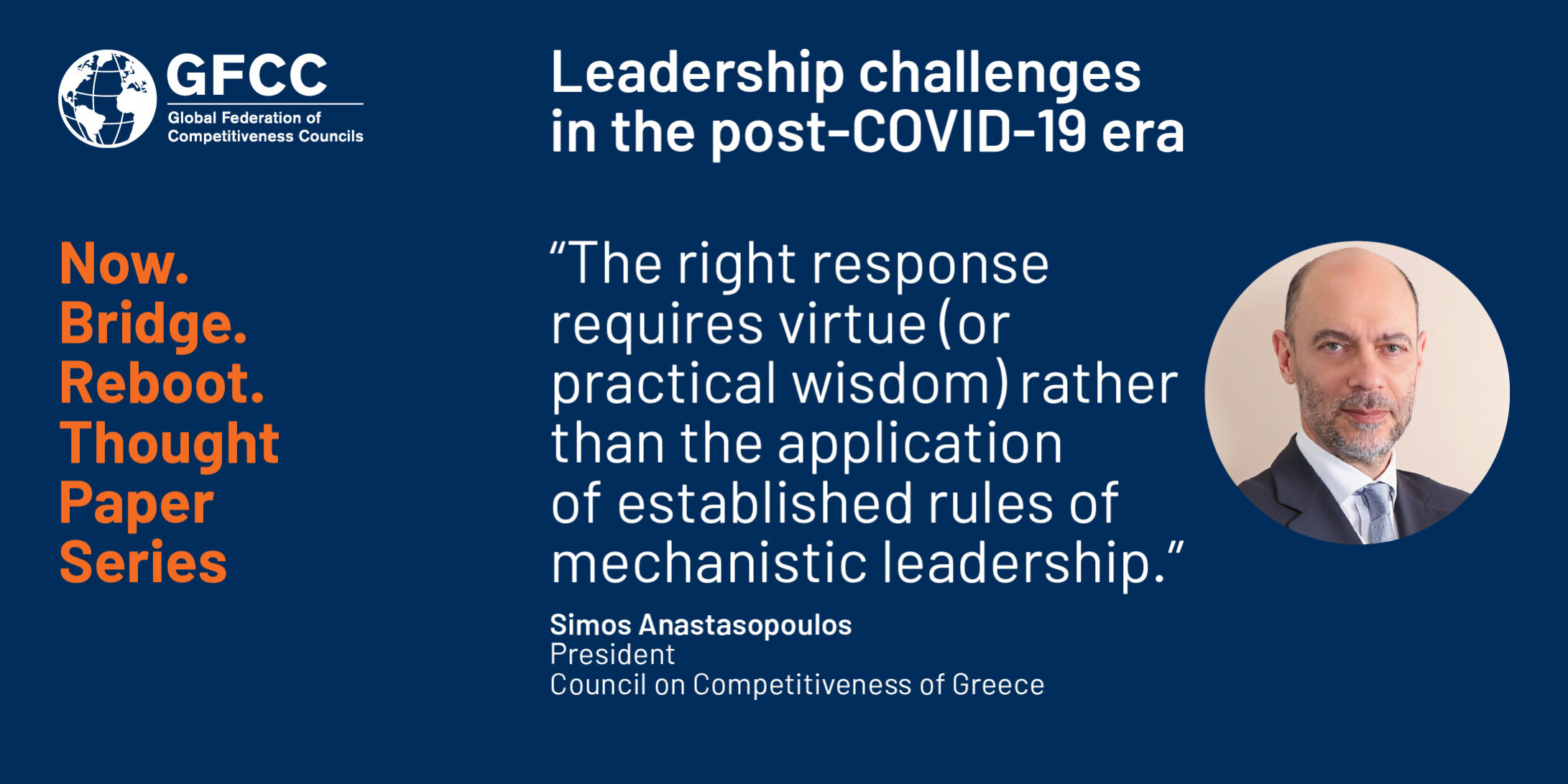
Slightly paraphrasing Aristotle, I argue that the right course of action depends on the details of a particular situation. The right response requires virtue (or practical wisdom) rather than the application of established rules of mechanistic leadership. Moral virtue, or excellence of character, is the disposition to act excellently. A person develops it partly due to their upbringing, and partly as a result of habits of action. Aristotle suggests that character arises from habit. He equates ethical character to a skill acquired through practice.

It remains upon all of us to make sure that we direct our efforts to train ourselves and our future leaders to develop excellence of character and, more importantly, that we learn to recognize this most significant characteristic in future leaders and respond accordingly.

It looks like the future will become increasingly unpredictable in a complex and uncertain environment. Adaptability will be the primary skill required in a leader. Along with practical virtue to assess the situation and courage to take decisive action without delay.

View the article in GFCC (Global Federation of Competitiveness Councils)
Share this!
Share on FacebookShare on Facebook Share on XShare on X Share on LinkedInShare on LinkedIn
Αναζήτηση στο CompeteGR
Πρόσφατα Άρθρα
  • ΆΝΘΡΩΠΟΙ | Δεν ήμουν εγώ! H φράση που διαλύει την εξυπηρέτηση!
    20/01/2026
  • Ο χρόνος είναι ένας αμείλικτος παράγοντας στην εποχή μας…εμείς ως Ελλάδα κάτι κάνουμε λάθος!
    16/01/2026
  • ΆΝΘΡΩΠΟΙ | Ιδεολογία vs Καθημερινότητα. Ποιό νικά;
    13/01/2026
  • O Πρόεδρος του Σ.Α.Ε.Ε. και του Συμβουλίου Ανταγωνιστικότητας της Ελλάδας, κύριος Σίμος Αναστασόπουλος στο MEGA TV NOW, συζητά με τη Μάιρα Μπάρμπα για την προοπτική της ελληνικής ανταγωνιστικότητας και τις δυσκολίες στο μεταρρυθμιστικό σχέδιο.
    07/01/2026

Leading through the chasm and into the future economy

Sep32020
Άρθρα & Νέα

The COVID-19 pandemic proved that a different leadership approach is required in order to respond timely and effectively to new challenges in an uncertain and complex environment.

We saw that delays in taking the necessary measures to contain the virus resulted in increased death rates across the globe. To avoid loss of life, it was paramount to make the right decision at the right time.

The ability to quickly develop an effective plan with the right priorities and execute it efficiently defines leadership under stress and pressure.

The Greek example (or paradox, if the legendary inefficiency of the country’s public administration is taken into account) is quite revealing. A decisive Prime Minister put together a group of experts who responded quickly to the situation. Under the leadership and direction of the PM, the committee took timely actions and managed to persuade the usually unruly Greeks to abide by quarantine measures, stay-at-home, and exhibit exemplary behavior. As a result, Greece managed the health crisis well. Effective government leadership gained people’s trust and persuaded the population of the necessity and adequacy of the urgent measures taken to protect the common good.

A combination of skills, knowledge and personality is required to respond efficiently and successfully when navigating unchartered waters. Adaptability with experience, quick understanding of complicated matters with sufficient expertise, team effort with individual thinking, and in-depth analysis with rapid responses are among the desired features. These attributes should be coupled with ethos, principles, an open and analytical mind, anticipation skills, courage, determination, practical virtue, and capacity for sound judgment. And of course, the ability to communicate.

I am not suggesting that a different set of skills and abilities is needed in a black swan situation. I argue on the importance of guiding qualities, which become indispensable, weigh more and provide the necessary substance for leadership in unusual circumstances. Ethics and values are crucial when the main concern is correct prioritization.

The pandemic offered numerous examples of misguided leaders who failed to realize human life as the supreme priority. Humility and an open mind are required to listen and accept sound advice, and self-assurance and courage are essential to make a difficult decision without overextending the consultation
period or delaying action.

As Aristotle argues in Nicomachean Ethics, the man who possesses character excellence, or virtue, will tend to do the right thing, at the right time, and in the right way. Aristotle emphasized the practical importance of developing the virtue of character to achieve what is finally more important, exemplary conduct or acts.

Slightly paraphrasing Aristotle, I argue that the right course of action depends on the details of a particular situation. The right response requires virtue (or practical wisdom) rather than the application of established rules of mechanistic leadership. Moral virtue, or excellence of character, is the disposition to act excellently. A person develops it partly due to their upbringing, and partly as a result of habits of action. Aristotle suggests that character arises from habit. He equates ethical character to a skill acquired through practice.

It remains upon all of us to make sure that we direct our efforts to train ourselves and our future leaders to develop excellence of character and, more importantly, that we learn to recognize this most significant characteristic in future leaders and respond accordingly.

It looks like the future will become increasingly unpredictable in a complex and uncertain environment. Adaptability will be the primary skill required in a leader. Along with practical virtue to assess the situation and courage to take decisive action without delay.

Δείτε το άρθρο στο GFCC (Global Federation of Competitiveness Councils)
Share this!
Share on FacebookShare on Facebook Share on XShare on X Share on LinkedInShare on LinkedIn
CompeteGR Sitemap
  • Terms & Conditions
  • Privacy Policy
  • Terms & Conditions
  • Privacy Policy
Our Blog
  • ΆΝΘΡΩΠΟΙ | Δεν ήμουν εγώ! H φράση που διαλύει την εξυπηρέτηση!
    20/01/2026
  • Ο χρόνος είναι ένας αμείλικτος παράγοντας στην εποχή μας…εμείς ως Ελλάδα κάτι κάνουμε λάθος!
    16/01/2026
  • ΆΝΘΡΩΠΟΙ |Ιδεολογία vs Καθημερινότητα. Ποιό νικά;
    14/01/2026
CompeteGR mailing list subscription

    Founding Members


    2026 © COMPETEGR.ORG
    • Αρχική
    • Το Συμβούλιο
    • Πρόγραμμα & Εκδηλώσεις
    • Γίνετε Μέλος στο Συμβούλιο
    • Η Φωνή μας
    • Επικοινωνήστε μαζί μας
    mobilemenu
    Go to Top